Showing posts with label CBHP. Show all posts

Sunday, June 30, 2013

CBHP project with DSWD ends

The VPHCS has concluded its two-year capability-building project funded by the Bayan Muna Party-List and supported by the Department of Social Welfare and Development (DSWD) in five barangays in Cebu.

The two-year project which started in June 2011, “Building community-based health programs (CBHP) in Cebu through training, education and services,” was implemented in Barangay T. Padilla, Sitio Ermita Proper in Barangay Ermita, and Sitio Lawis in Barangay Pasil in Cebu City, Sitio Back of Matimco, Barangay Subangdaku in Mandaue City, and Barangay Canjulao in Lapu-lapu City. Beneficiaries in the barangays included 310 households in Barangay T. Padilla, 240 households in Sitio Ermita Proper, 220 households in Sitio Lawis, 160 households in Sitio Back of Matimco, and 500 households in Barangay Canjulao.

Community health workers attend basic health skills training

The project worked with people’s organizations in the communities, including the Pundok sa Sitio Para sa Kauswagan (PSPK) in T. Padilla, Ermita Fisherfolks Association in Ermita, Pasil Women’s Association in Pasil, KALUWASAN in Sitio Back of Matimco, and the Nagkahisang Kabus sa Lapu-lapu in Canjulao. They have health committees with community health workers (CHWs). 

Health education on dengue fever in Canjulao

A series of health skills trainings of three levels were conducted for 75 CHWs in the five barangays in order to equip them with basic knowledge and skills to render preventive, promotive and selective curative care to the residents. Health education classes were also conducted among residents in the areas to promote health awareness with the aim to empower them in terms of health care delivery on common health problems that can be prevented in the community level. The VPHCS staff also guided, monitored and upgraded the knowledge and skills of the trained CHWs in between trainings as they delivered their health services to the residents.

Health education on acute respiratory infection in T. Padilla

The project is highly significant today with the prevalence of common health problems that can be addressed in the community level. It has been observed that people seek tertiary care in the hospitals when they are already affected with serious illnesses that could have been prevented in their early stage in their homes. With increased health awareness and capacity in knowing, preventing and taking care of their own health needs through home remedies and indigenous resources in their communities, the incidence of serious illnesses and preventable ailments can be lessened. Eventually, the high cost of hospital care which unfortunately is now generally shouldered from out-of-the pockets can also be lessened. In the long term, quality of life can be enhanced.

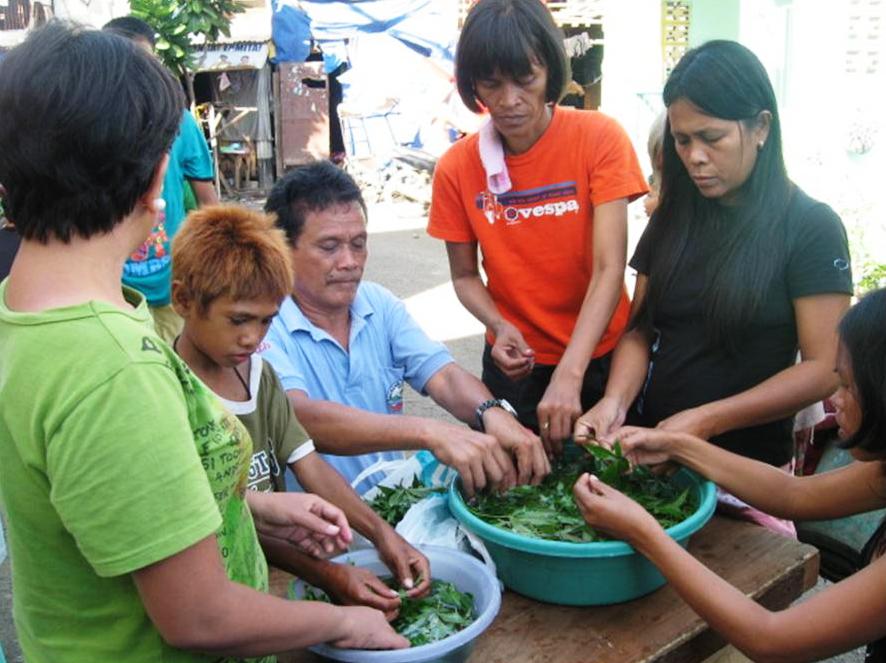
Community health workers making lagundi syrup for cough in Ermita

Community health workers doing ventusa in Canjulao


Friday, October 12, 2012

The struggle for health is a struggle for social justice

By Laravic Flores 

G
rowing up in a family of activists who survived martial law in the Philippines, learning rally chants such as “Makibaka! Huwag matakot!” was just as normal as learning my ABC’s. Throughout my upbringing, my parents emphasized values of social justice and advocating for the marginalized with a purpose to "Serve the People.” As a medical student currently studying in Cuba, one of the guiding principles we are taught in our medical training is the concept of “solidaridad” and the essence of “ciencia y conciencia” -- that as health professionals, we must not only have a strong basis in science and medicine; but moreover, we must have a social conscience that guides our work in solidarity with poor and disenfranchised communities to use the skills we learn in service of the people most in need. It is with these principles gleaned from both my family rearing and my Cuban medical training that I decided to travel to my homeland this past summer to work with community-based health programs in the Philippines (CBHP’s) and to volunteer with the medical mission relief efforts in response to the floods that affected over 2 million people in the city of Manila. 

Laravic (center, seated), with a family in Barangay Canjulao, Lapu-lapu City.

I was privileged to have had the opportunity to work with Council for Health and Development (CHD) and Visayas Primary Health Care Services, Inc. (VPHCS) who facilitated my itinerary and integration with community-based health programs in the Philippines (CBHPs) both in Manila and Cebu in September 2012. Working with these organizations contributed a great deal to my learning experience and was a valuable addition to my ongoing medical education and development as a future physician dedicated to working with underserved communities. CBHPs and Community Health Workers (CHWs) follow a primary care community empowerment model similar to that which we are taught in Cuba – that health must be viewed from a bio-pyscho-social perspective. As such, in addition to providing medical care, there must also be education and advocacy to address the political, social, and economic factors that affect health. Working with various CBHPs and speaking to CHWs, I gained a better understanding of their experiences promoting health and well-being in their communities through providing free basic health services, and conducting outreach and education that emphasize disease prevention. In addition, participating in political activities that advocate for policies that are pro-people and consider the needs of marginalized communities illustrated the importance of community organizing to overcome past and current struggles. 

Laravic with health workers of the Ermita Fisherfolks Association 
in Barangay Ermita, Cebu City.

From the fisher folk community in Ermita with a more established CBHP spanning almost three decades, to the more recent CBHPs continuing to develop in communities in Mandaue City and Lapu-Lapu City – despite the differences in localities and years of experience, the essence of their work and principles remain the same. CHWs are not only responsible for healing acute physical illnesses in their communities, they are also essential to community building and community organizing in order to address the social ailments endangering their survival and well-being. It was precisely because CHWs were able to organize their fellow neighbors and build strength in numbers that communities in Ermita and Mandaue City have been able to resist threats of demolition from the local government that would have led to massive displacement of already vulnerable communities.

Aside from learning from CBHPs and CHWs about their community experience, my exposure trip also allowed me to see with my own eyes the dire health situation experienced by patients in government health institutions. Walking through the crowded wards in Vicente Sotto Memorial Medical Center, mothers who had just given birth were sitting on the corners of the bed or on chairs nearby. There was no room for them to even lie down because the bed had to be shared by four newborn babies sleeping side-by-side because there were no individual cribs available to them. However, on another floor of the same hospital was another post-partum ward for those with the resources to pay for more comfortable accommodations. These mothers had their own private air-conditioned rooms with amenities that should be provided to every mother and child going through the stress of labor and delivery. Even within the same institution, the disparities due to the privatization of health care were appallingly apparent. Having witnessed this for myself made the forum I attended a few days later on the topic of the corporatization of health that much more relevant.

In the face of the struggles and challenges confronting the marginalized sectors of Philippine society – the rural and urban-poor communities in town centers threatened by demolitions, farmers and indigenous tribes in the mountainside threatened by militarization – the resilience of these communities is a testament to the power of community organizing. And utilizing health as a tool for community organizing speaks volumes to the work of VPHCS and the associated CBHPs and CHWs in implementing this primary care community empowerment model. Integrating with the various CHWs and seeing the passionate work of the VPHCS staff reaffirmed my belief that health must be approached from a holistic perspective. I am very grateful to everyone at VPHCS for hosting me and giving me the privilege to work with them this summer. Through my various experiences, I have seen the dual role of physicians as both healers and as advocates, and I realize the vital role doctors and all those in the health sector have in working towards social change and community upliftment. The struggle for health is a struggle for social justice. Those in the field of health are vital resources in working to achieve that justice.

Laravic Flores was born in the Philippines and later immigrated with her family to the U.S. shortly after the fall of the Marcos dictatorship in 1986. Raised in a family of activist who survived the oppressive years of martial law, her parents shared their deep love for their mother country and the historical socio-political-economic causes of the serious problems still suffered by the majority of people in the Philippines. They instilled values of social justice throughout her upbringing, emphasizing the importance of community organizing and solidarity work with oppressed communities. It is these same guiding principles that led her to study medicine in Cuba and work with CBHP’s in 2012. She is currently studying at the Latin American School of Medicine in Havana, Cuba and is conducting research to explore the topic of “Health and Liberation in Cuba and the Philippines: A Comparative Analysis of Health Care Models from a Historical and Social Justice Perspective.” 

Tuesday, June 5, 2012

CBHP project with DSWD

The VPHCS continues its health capability-building project funded by the Bayan Muna Party-List and supported by the Department of Social Welfare and Development (DSWD) in five barangays in Cebu.

The two-year project which started last June 2011, “Building community-based health programs (CBHP) in Cebu through training, education and services,” is implemented in Barangay T. Padilla, Sitio Ermita Proper in Barangay Ermita, and Sitio Lawis in Barangay Pasil in Cebu City, Sitio Back of Matimco, Barangay Subangdaku in Mandaue City, and Barangay Canjulao in Lapu-lapu City. Beneficiaries in the barangays include 310 households in Barangay T. Padilla, 240 households in Sitio Ermita Proper, 220 households in Sitio Lawis, 160 households in Sitio Back of Matimco, and 500 households in Barangay Canjulao.

Members of the Ermita Fisherfolks Association pick lagundi leaves before boiling them into a decoction and a syrup as a cough medicine.

A community health worker in Ermita takes the blood pressure during a regular community clinic.

Health services including operation blood pressure are conducted in the people’s organization’s health center in Sitio Back of Matimco.

The project works with people’s organizations in the communities, including the Pundok sa Sitio Para sa Kauswagan (PSPK) in T. Padilla, Ermita Fisherfolks Association in Ermita, Pasil Women’s Association in Pasil, KALUWASAN in Sitio Back of Matimco, and the Nagkahisang Kabus sa Lapu-lapu in Canjulao. They have health committees with community health workers (CHWs). 

VPHCS staff Jessica Pejo conducts a health education class for mothers in Canjulao.

Health skills trainings were conducted for 75 CHWs last year in order to equip them with basic knowledge and skills to render preventive, promotive and selective curative care to the residents. Health education classes were also conducted among residents in the areas to promote health awareness with the aim to empower them in terms of health care delivery on common health problems that can be prevented in the community level. The VPHCS staff also guide, monitor and upgrade the knowledge and skills of the trained CHWs in between trainings as they deliver their health services to the residents. More trainings and health education activities are expected to continue this year. 

VPHCS staff Irish Ramirez talks to mothers in Canjulao on nutrition.

The project is highly significant today with the prevalence of common health problems that can be addressed in the community level. It has been observed that people seek tertiary care in the hospitals when they are already affected with serious illnesses that could have been prevented in their early stage in their homes. With increased health awareness and capacity in knowing, preventing and taking care of their own health needs through home remedies and indigenous resources in their communities, the incidence of serious illnesses and preventable ailments can be lessened. Eventually, the high cost of hospital care which unfortunately is now generally shouldered from out-of-the pockets can also be lessened. In the long term, quality of life can be enhanced. 

VPHCS Dr. Erlinda Posadas conducts blood sugar screening for diabetes mellitus in T. Padilla.

Monday, March 5, 2012

Balay Kahimsog accepts bookings

The Balay Kahimsog continues to accept bookings for seminars, retreats and other gatherings of government agencies, schools, and non-government organizations at affordable prices.

  The building overlooks the Visayan Sea and the magnificent mountains of Bohol.

The Balay Kahimsog is a concrete two-storey building located at the top of the hills of Barangay Cambanac, Baclayon, overlooking the quiet sea on one side and the magnificent mountains on the other side. Surrounded by trees, vegetables and flowers, it is reached by any vehicle about 15 minutes ride through scenic rolling hills from the main highway of Baclayon, about seven kilometers from Tagbilaran City.

 The lobby, reading area and stairs to the second floor.

It is a training center for health workers in community-based health programs (CBHPs) in Central Visayas region, and a resource center for primary health care and alternative forms of medicine including herbal medicine. A spacious open-air conference hall that could accommodate 150 persons occupies the entire second floor. Its first floor has a dormitory that could accommodate twenty persons, an air-conditioned room for two to three persons, an office, a kitchen, a living room and a reading area in the lobby.

The open spacious second floor can accommodate up to 150 persons.

To generate income for the programs and services of the CBHPs, the center has been accepting bookings. Proceeds also support medical and dental missions, health skills trainings and alternative medical practices such as herbal medicine preparation, ventusa, acupuncture and homeopathy. Built primarily from funds generated by the Fil-Am Center for Community Health and Development (FACCHD) in Pleasanton, Califonia, U.S.A, the construction took nearly four years. It started operation in the second quarter 2009 and has since then accepted bookings from different groups.

The hallway now used as dining area.

With its fresh air and magnificent view, it is also a perfect place for just staying over for tranquility, a brief respite from the hustles and bustles of city life.

Thursday, October 20, 2011

Asmae – VPHCS end of project document released

An end of the project document (EOPD) of the VPHCS three-year projects with the Asmae – Association Soeur Emmanuelle in France has just been released.

The 28-page document in magazine form chronicles the three projects implemented with the support of Asmae from March 2008 to December 2010 to improve the health and welfare of three urban poor communities in Metro Cebu, namely: Sitio St. Mary Grace in Barangay Talamban, Cebu City, Sitio Back of Matimco in Barangay Subangdaku, Mandaue City, and Sitio Salvage in Barangay Looc, Lapu-lapu City.


The VPHCS also reaped huge gains in terms of organizational strengthening and capability building to pursue its programs and services in a more systematic, effective and efficient manner.

One project evolved into the second and then into the third. The first project, “Capability Building on Community-based Health Programs in Cebu: Community Diagnosis” in March 2008 to August 2008 was followed by the second project “Promotion of Environmental Health and Child Nutrition in Community-based Health Programs in Cebu and Strengthening the Sustainability Aspect of the VPHCS” in April 2009 to December 2009 and the third project, “Strengthening and Sustaining the Community-based Health Programs in Cebu” in January 2010 to December 2010.”

The projects worked in partnership with the people’s organizations, including the St. Mary Grace Neighborhood Association in Barangay Talamban, the Kaming Lumulupyo walay Sandigan (KALUWASAN) in Sitio Back of Matimco, and the Anakpawis – Looc Chapter in Sitio Salvage.

Generally, the whole project is part and parcel of the community-based health programs (CBHP) building endeavors of the VPHCS for the past several years.

Building and strengthening local capacity has become more urgent with the advent of the national and global trend on health which emphasizes user-fee services and privatization of government health service agencies in the face of the people’s worsening poverty that severely incapacitates them to pay for health care.

The community projects have indeed harnessed the people’s initiatives to map out their own plans and programs to improve the health situation in their communities. With such initiatives proven and embedded in their organizations, the CBHPs in the three sitios continue to this day to be pursued vigorously in order to meet the health needs of the people in the face of the increasing cost of health care and economic crisis facing our country. The project outputs – the health centers, the toilets, the services of the health committees and the improved health-seeking behavior and general health situation of the people shall remain as indelible hallmarks of the project in the years to come.

Tuesday, August 30, 2011

Yokohama National University Students Visit VPHCS

Graduate students of the Yokohama National University (YNU) in Japan came to know about community-based health programs (CBHPs) in Cebu during their visit with the Visayas Primary Health Care Services, Inc. last August 24, 2011.

Prof. Osamu Koike, YNU Professor (extreme left) and his students. Extreme right is VPHCS staff Dr. Erlinda Posadas with Prof. Cherry Ballescas on her right.

The six students were led by their Professor, Osamu Koike, PhD., Professor of Public Policy and Administration of the International Graduate School of Social Sciences of the YNU. Sun Star Columnist and Prof. Cherry Ballescas of the Regional Center of Expertise on Education for Sustainable Development (RCE)–Cebu facilitated the visit of the group.

In their visit in the VPHCS office, VPHCS staff members Dr. Erlinda Posadas explained the programs of the VPHCS which work in partnership with people’s organizations in depressed communities in providing basic health services by developing CBHPs based on the principles of primary health care.

The group with two community health workers in Sitio Back of Matimco.

In order to have a better understanding of CBHPs, the group visited Sitio Back of Matimco in Barangay Subangdaku, Mandaue City, where they talked with community health workers (CHWs) who shared how they render basic promotive, preventive and certain curative services in their community. The Japanese students also had an ocular survey of the houses, walked in flooded ground and talked with the residents. The students learned about the difficult situation facing the residents and were inspired about how they have collectively worked, through their organization, the Kaming Lumulupo walay Sandigan (KALUWASAN) to improve their living conditions. Flooding has been a perennial problem in the sitio due to the absence of a drainage system and worsened by the reclamation of a portion of the land.

The group poses in front of the chapel in the sitio.

The group poses with VPHCS staff Cheryl Molina (extreme left), a CHW and two kids.

With three CHWs in front of a housing project being constructed in the sitio.

Walking in flooded ground.

Looking at the communal water project, the source of drinking water in the sitio, which is managed by the people’s organization.

The Japanese visitors had also visited an urban poor community in Metro Manila prior to their visit in Cebu. Their visit in Manila was facilitated by Dr. Jaime Galvez-Tan, RCE member VPHCS Board of Trustees member and UP – Manila Professor.

Sunday, June 12, 2011

CBHP project with DSWD

The VPHCS is soon set to implement a health capability-building project funded by the Bayan Muna Party-List and supported by the Department of Social Welfare and Development (DSWD) in five barangays in Cebu.

The two-year project, “Building community-based health programs (CBHP) in Cebu through training, education and services,” shall be implemented in Barangay T. Padilla, Barangay Ermita (Sitio Ermita Beach) and Barangay Pasil (Sitio Lawis) in Cebu City, Barangay Subangdaku (Sitio Back of Matimco) in Mandaue City, and Barangay Bankal in Lapu-lapu City. Beneficiaries in the barangays include 310 households in Barangay T. Padilla, 240 households in Sitio Ermita Beach, 220 households in Sitio Lawis, 160 households in Sitio Back of Matimco, and 250 households in Barangay Bankal.

The project works with people’s organizations in the communities, including the Pundok sa Sitio Para sa Kauswagan (PSPK) in T. Padilla, Ermita Farmers’ Association in Ermita, Pasil Women’s Association in Pasil, KALUWASAN in Sitio Back of Matimco, and Casia Matab-ang Residents’ Association in Bankal. They have health committees with community health workers (CHWs) interested and willing to be part of the project.

The project shall train the CHWs and promote health awareness of residents in the five areas with the aim to empower them in terms of health care delivery on common health problems that can be prevented in the community level. Basic health skills trainings of three progressive levels will be rendered to 75 CHWs in order to equip them with basic knowledge and skills to render preventive, promotive and selective curative care to the residents. The VPHCS staff shall also guide, monitor and upgrade the knowledge and skills of the trained CHWs in between trainings as they deliver their health services to the residents.

Health information classes on common health issues existing in their areas will also be delivered to the residents.

The project is highly significant today with the prevalence of common health problems that can be addressed in the community level. It has been observed that people seek tertiary care in the hospitals when they are already affected with serious illnesses that could have been prevented in their early stage in their homes. With increased health awareness and capacity in knowing, preventing and taking care of their own health needs through home remedies and indigenous resources in their communities, the incidence of serious illnesses and preventable ailments can be lessened. Eventually, the high cost of hospital care which unfortunately is now generally shouldered from out-of-the pockets can also be lessened. In the long term, quality of life can be enhanced.

Monday, February 14, 2011

VPHCS seeks accreditation with Bohol government

The VPHCS which has established community-based health programs (CBHP) in various communities in different municipalities in Bohol is seeking accreditation as a non-government organization with the Bohol provincial government.

It is now currently working to comply with the documentary requirements for the accreditation.
The accreditation is in line with the Local Government Code (LGC) which provides that people’s organizations (POs) and nongovernmental organization (NGOs) are active partners in the pursuit of local economy, and that local government units (LGUs) may enter into joint ventures and such other cooperative arrangements with POs and NGOs to engage in the delivery of certain basic services, capability-building and livelihood projects, and to develop local enterprises designed to improve productivity and income, diversify agriculture, spur rural industrialization, promote ecological balance, and enhance the economic and social well-being of the people.

With its accreditation, the VPHCS shall more actively pursue its health programs with the support of the Bohol LGUs. It can also avail of assistance , financial or otherwise, for economic, socially-oriented, environmental, or cultural projects, as provided in the LGC.

Monday, July 12, 2010

“Health for all”: The staying power of community-based health programs

By Aurora Fernandez, R.N.

Rosario was quiet and subdued as she slowly walked towards us. Coming closer, it was plain to see how pale and weak she was. Three weeks earlier, she had agonized through 14 hours of breech childbirth, soaking five blankets with blood and without a midwife, delivered a stillborn baby. Shortly afterwards, the midwife showed up to assess the afterbirth and without any compunction, asked for P100.00.

The 33-year-old mother of four, complacent that her previous deliveries had been problem-free, had no prenatal care, even though her husband had urged her several times to see the doctor at the nearby Barangay Health Unit.

Now she was bleeding again, with blood clots the size of fists. She urgently needed hospitalization for a blood transfusion and dilatation and curettage (D & C).

But how to pay for it? Her husband was a gravedigger at the Liloan cemetery, and when there were no funerals, he cut down and pounded buli (a palm tree) trunks all day long to produce enough landang (palm flour) for binignit (a dessert with coconut milk). Lack of money meant their 12-year-old eldest son didn’t start school until last year.

Despite her protests, Rosario was persuaded to go to Vicente Sotto Memorial Medical Center by volunteers and staff of the Visayas Primary Health Care Services (VPHCS). Dr. Erlinda Posadas of VPHCS admitted her and coordinated her treatment, even obtaining the medications and supplies on credit from an outside pharmacy. Working with the radiologist and OB-GYN physician, Dr. Posadas made sure the patient was promptly seen and a successful D & C performed at 11:00 PM the same day, following an ultrasound which showed placental fragments. Since Rosario’s husband had a fever, a friend, Julie, stayed with her overnight at the hospital.

Julie described the chaos at the emergency room that night as a scene straight out of Dante’s Inferno: nightmarish, frightening, and harrowing, with bloody patients moaning and screaming in pain while others waited desperately for medical attention. Two other postpartum patients lay on cots in the ER hallway while their families tried to find the money for a D&C. It was the kind of moral dilemma that drove doctors to despair. But Julie was also left with the unforgettable image of a no-nonsense doctor – Dr. Erlinda Posadas – whose compassion for a patient far exceeded ordinary expectations.

---0---

Trying to make sense of the Philippines’ health care system where “those with the greatest need have the least access” is an exercise in futility. Barely propped up by Philhealth, the government health insurance system only covers 15 percent of hospitalization, medications and selected outpatient procedures, but NOT regular preventive medical check-ups – and the patient still gets slapped with a huge bill on discharge from the hospital.

Rosario’s designation as a charity case meant no doctors’ fees, but other services had to be paid for. Julie helped her obtain reimbursement for the loaned medications from the municipal government, but bureaucratic red tape at the local DSWD (Department of Social and Welfare Services) forced her to return three times before finally getting financial aid.

With the support of VPHCS, Rosario did not have to pay anything, but the whole episode was sobering. It pointed to the need for a rational health care system accessible to those without the means to pay, throwing into sharp relief the necessity for systematic reproductive health education and outreach not just to women of childbearing age and adolescents, but to entire barangays and local government units (LGUs). At the very least, it showed the need for easier access to financial assistance in LGUs -- services paid for by tax monies.

If not for timely intervention from VPHCS, Rosario would now be another statistic in the unrelenting maternal mortality data of this country, where eleven women die from maternal causes every single day, a tragic loss which not only has a profound personal and societal impact but also has economic consequences for years to come. Rosario’s stillborn infant did become a statistic: Philippine infant mortality rate remains at 34/1000 (Thailand’s is 18.23/1000).

--- o ---

What is Visayas Primary Health Care Services and what does it do? As a community-based health program (CBHP), VPHCS, which has been in existence for 30 years, provides free or low-cost health care services to indigents in urban and remote rural areas in Cebu and Bohol. It is a limited safety net for those who fall through the cracks of government health care, but its proven ability to network with other health care practitioners – the specialists in tertiary care, for example – tremendously facilitates provision of services. One of its strong points is its ability to navigate the bureaucratic hospital maze and coordinate essential services. Another is its holistic orientation which includes the promotion of integrative medicine and appropriate technology, specifically acupuncture, homeopathy, reflexology and herbal meds.

In July 2006, VPHCS initiated a reproductive health program called YO! Lead or Youth on the Lead. Funded by Planned Parenthood Federation of America, YO! works with youth organizations in schools and local communities, developing leadership and life skills and providing information and access to reproductive health care services in office clinics and mobile medical missions.

CBHPS embody the principles of primary health care declared at the 1978 Alma Ata International Conference on Primary Health Care: fair, equitable and efficient health care services; community participation in decision-making; and an emphasis on education and preventive health. These principles are evident in the medical missions requested by various barangays and the annual training and skills update of community health workers.

CBHPs work without fanfare and with modest remuneration, their vision carried out by dedicated and selfless staff and volunteers in numerous communities throughout the Philippines - and in the United States. Seminal and groundbreaking, CBHPs deserve a place in the country’s Bantayog ng mga Bayani (Monument to Heroes) for their proven record of public service which has saved – and continues to save – the lives of countless Filipinos.

Aurora Fernandez, R.N. is a retired public health nurse based in California who believes that health care is a human right that should be accessible to everyone regardless of ability to pay. For her, a healthy, productive population strengthens and contributes to nation-building.

Friday, July 9, 2010

Dissemination Forum on Youth Reproductive Health

The Visayas Primary Health Care Services, Inc. (VPHCS) held a dissemination forum on July 9, 2010 at the Cebu Midtown Hotel function room on its just concluded four-year project, “Yo! Lead or Youth on the Lead.”


Lasting July 2006 to June 2010, the project is a leadership program for youth–initiated adolescent reproductive health advocacy and services in the provinces of Cebu, Bohol and Occidental Negros. It worked with 29 youth organizations in selected colleges and communities to promote increased practice of healthy reproductive and sexual health behaviors among the youth. It is funded by the Planned Parenthood Federation of America – International Division (PPFA).


The dissemination forum was participated in by representatives of the youth organizations in the three provinces who shared their achievements, experiences and lessons in the project. Representatives of officials of the covered communities and schools, government agencies and other non-government organizations involved in adolescent reproductive health also joined the forum.


Project coordinator Ms. Cheryl Padilla Molina presented a summary of the project. An open forum followed. Dr. Erlinda Posadas and Dr. Mark Telesforo Molina both members of the management committee of the VPHCS gave the opening and closing remarks, respectively.


The VPHCS is a non-government organization founded in 1985 that works with people’s organizations in depressed and underserved communities in providing health services and setting up community-based health programs (CBHPs). The Yo! Lead is one of its projects.

Monday, June 14, 2010

Community medicine elective course for UP medical students

The Visayas Primary Health Care Services, Inc. (VPHCS) facilitated the community medicine elective course for eight students of the University of the Philippines – College of Medicine (UPCM) Class 2012 in urban and rural poor communities in Cebu and Bohol last May 15 – 30, 2010.

The elective course was initiated by the Community Medicine Development Foundation (COMMED) in coordination with the UPCM. The COMMED is a non-government organization based in Manila that organizes and brings physicians and health science students to practice, promote and develop community medicine as an integral aspect of community health work.

The eight students currently in their fourth year medical school in UPCM, visited and stayed in urban poor communities in Cebu including Barangay Pasil and Sitio Mary Grace in Talamban in Cebu City, and Sitio Back of Matimco in Barangay Subangdaku, Mandaue City. In Bohol the students stayed in farming and fishing communities in Ubay, Loon and Trinidad.

These communities have existing community-based health programs (CBHPs) with active community health workers (CHWs) and people’s organizations that deliver primary health care services to the residents with whom the medical students integrated and lived. The two-week community immersion enabled the students to understand concepts and actual practice of community health work, organizing and development.

The students learned to analyze health and development problems in the communities in relation to the social determinants of health and realize their role as medical students and doctors in health development work.

The students are Raoul Felipe, Arthur Z. Gallo, Patrick Sy, Ferdinand Luis G. Suarez, Robert Angelo P. Totanes, Carol Stephanie C. Tan, Anthony A. Suguitan, and Lee Edson P. Yarcia.


Photo credit: Arthur Z. Gallo & VPHCS

Monday, May 17, 2010

New partnership with Asian Community Trust

The Visayas Primary Health Care Services, Inc. (VPHCS) has forged a partnership with the Asian Community Trust (ACT) to implement the project, “Building community-based health programs to promote health and prevent disease in Bohol.”

The project areas are Barangay Sto. Nino in the Municipality of San Miguel and Barangay Caluasan in the Municipality of Dagohoy. The communities have been affected by the failure of the Malinao Dam Project which has worsened their economic situation that in turn affected their health conditions. The project which started in April 2010 works with the people’s organizations in the communities, namely, the MALALA or the Mag-Uuma sa LACALSANDA Batok sa Land Levelling (Farmers in Lacalsanda against Land Leveling), the San Miguel Organic Farmers Association and the Dagohoy Farmers’ Association.

The project shall equip community health workers (CHWs) and leaders of the people’s organizations with knowledge and skills to build community based health programs which shall address the common health problems in their communities. Capacity building is a primary strategy in the project which will enable the CHWs and the leaders to launch health campaigns that will address the prevalence of common preventable and communicable diseases. Direct health services by project staff and volunteer health professionals shall also address the diseases in the communities.

The Asian Community Trust (ACT), Japan's first fund raising-style charitable trust, was established in 1979 to assist people at the grass-roots level in Asian developing countries. It has supported projects in more than five Asian countries, in fields spanning health, medical treatment, education, youth training, and development of rural communities.

Sunday, May 16, 2010

Medical and dental mission conducted in Barili

More than 150 patients were served in a medical and dental mission conducted in Barangay Gunting, Barili on April 24, 2010. The activity was sponsored by the Farmers Development Center (FARDEC) and supported by the Visayas Primary Health Care Services, Inc. (VPHCS), the Visayas Climate Action Network, the Community Empowerment Resource Network (CERNET), the local government unit of Barili, and German Doctors of Cagayan de Oro City.

Medical check-up, dental services and free dispensing of medicines were rendered by staff members and volunteer doctors and nurses of the VPHCS.

A survey of the health conditions in the barangay using a questionnaire was also conducted among selected patients during the mission. Results of the survey shall be collated by the VPHCS staff and disseminated to the barangay residents for action.


Search This Blog